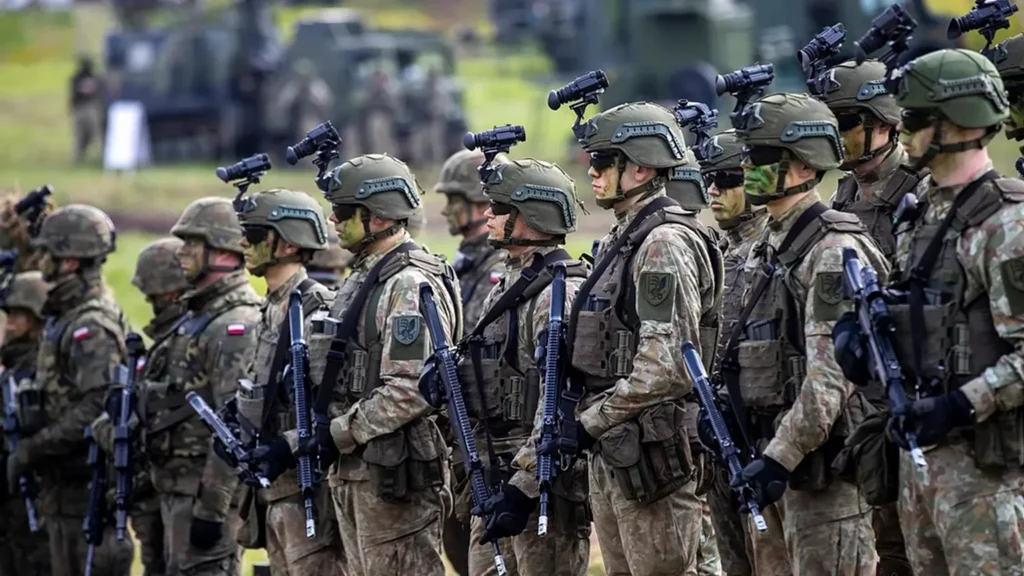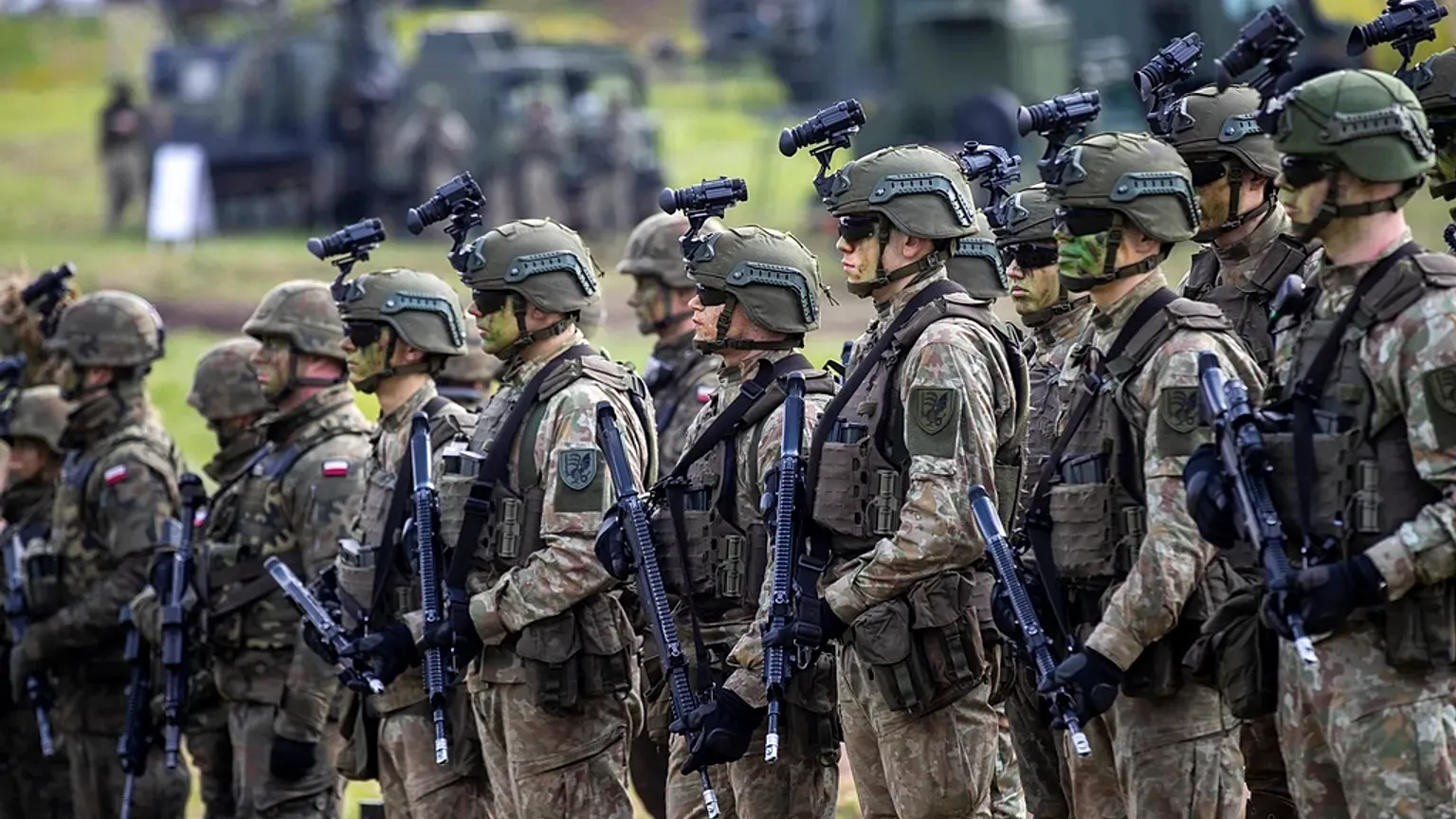
Europe’s security environment has undergone a dramatic transformation along the Baltic Sea coastline, where the standoff between NATO and Russia has intensified into a covert but dangerous confrontation. Poland’s recent decision to militarize its northeastern frontier—adjacent to the heavily fortified Kaliningrad exclave—signals a new phase in this shadow conflict, where hybrid warfare has reshaped the nature of modern threats. As governments across the region assess the implications of Moscow’s escalating strategy, one question looms large: where do we go from here?
The Baltic Sea region, once considered a stable maritime corridor, now embodies the frontline of a stealthy but escalating struggle. Poland’s proactive measures, including the fortification of its border with Kaliningrad, reflect a broader shift in how nations are responding to Russia’s hybrid tactics—where drones, cyberattacks, and clandestine operations have become the new arsenal of influence.
Protected skies and disrupted borders: the emergence of hybrid warfare
The Baltic frontier has evolved into the epicenter of an undeclared conflict, where traditional borders offer little shelter from Russia’s evolving playbook. In recent weeks, the skies have seen an uptick in unauthorized drone incursions and repeated airspace violations, each serving as a deliberate attempt to test NATO’s defensive readiness. Polish officials have traced multiple incidents to coordinated campaigns aimed at destabilizing regional security, underscoring Moscow’s willingness to exploit gaps in Western defenses.
Perhaps even more concerning is Russia’s reported exploitation of migration flows, electronic warfare, and targeted sabotage to weaken public trust and expose critical infrastructure vulnerabilities. These unconventional threats, though lacking the spectacle of open warfare, carry a stealthy danger: they erode the boundary between peace and aggression, forcing nations to rethink their security frameworks. For Poland—a pivotal NATO member on the alliance’s eastern edge—the implications are profound, with allies and adversaries alike scrutinizing its next moves.
Warsaw’s response: a multi-layered fortress at the baltic’s edge
Faced with mounting provocations, Poland has embarked on an ambitious cross-agency security initiative along its 200-kilometer border with Kaliningrad, signaling a decisive departure from reliance on diplomatic measures alone. This operation, which merges military, law enforcement, and counterterrorism capabilities, is not merely about fortifying physical barriers; it’s about projecting unmistakable deterrence. By integrating state-of-the-art surveillance networks, rapid-response units, and layered defensive protocols, Poland is sending a clear message: hybrid incursions will encounter an immediate and robust countermeasure.
The operational blueprint includes:
- Instant threat identification: A grid of radar systems, thermal imaging, and AI-driven analytics to monitor potential breaches across terrestrial, maritime, and aerial domains;
- Hardening vital infrastructure: Reinforced defenses for energy conduits, rail linkages, and telecommunications hubs, all of which have been prior targets of Russian subversion;
- Coordinated border patrols: Unified patrols integrating Border Guard personnel, military units, and specialized counterterrorism forces to eliminate surveillance gaps.
This approach leaves no room for ambiguity: Poland is prepared to intercept any attempt to use its territory as a staging ground for sabotage or psychological warfare. Yet, while the strategy bolsters physical and operational security, it has also sparked a contentious debate—one that questions the balance between deterrence and potential escalation in a new era of hybrid conflict.
The waiting game: what lies ahead for european security?
Poland’s bold stance may set a precedent for neighboring states, but the move has also drawn sharp critiques. Critics warn that militarizing borders risks inflaming tensions, while advocates argue that assertive deterrence is the only viable path in an age where cyber strikes and covert actions have blurred the lines of warfare. International reactions have been similarly split: Baltic governments are urging a stronger NATO presence, while Kremlin-aligned narratives label the measures as reckless provocation.
What is beyond dispute is that the Baltic Sea is no longer a tranquil zone in Europe’s defense calculus. It has become the nucleus of a low-intensity but high-stakes conflict where the thresholds between peace and provocation are deliberately obscured. Poland’s actions may have marked a turning point, but the terrain remains unstable. The central dilemma now is whether NATO and the EU can forge a unified policy—or remain confined to reactive measures against Russia’s ever-evolving tactics.
Navigating the tightrope: deterrence vs. restraint
Poland’s initiative has triggered a reckoning across Western capitals. Should nations intensify their defenses, even at the risk of provoking further escalation? Or should they pursue diplomacy in a climate where trust is scarce? The Baltic states, already on high alert, advocate for a more muscular NATO footprint and preemptive strike capabilities. Conversely, voices in Brussels and Washington counsel prudence, cautioning that missteps could spiral into a direct confrontation.
One fact remains unassailable: the era of passive security measures is obsolete. The critical question is not whether hybrid warfare has arrived—it’s how Europe will adapt. Poland’s bold strategy could either become the catalyst for a broader realignment or serve as a cautionary example of premature escalation. The coming months will determine whether the continent chooses resilience—or succumbs to the inertia of indecision.